The Little Shell That Came to Satara

Grade 1 EVS animated storybook with generated raster illustrations

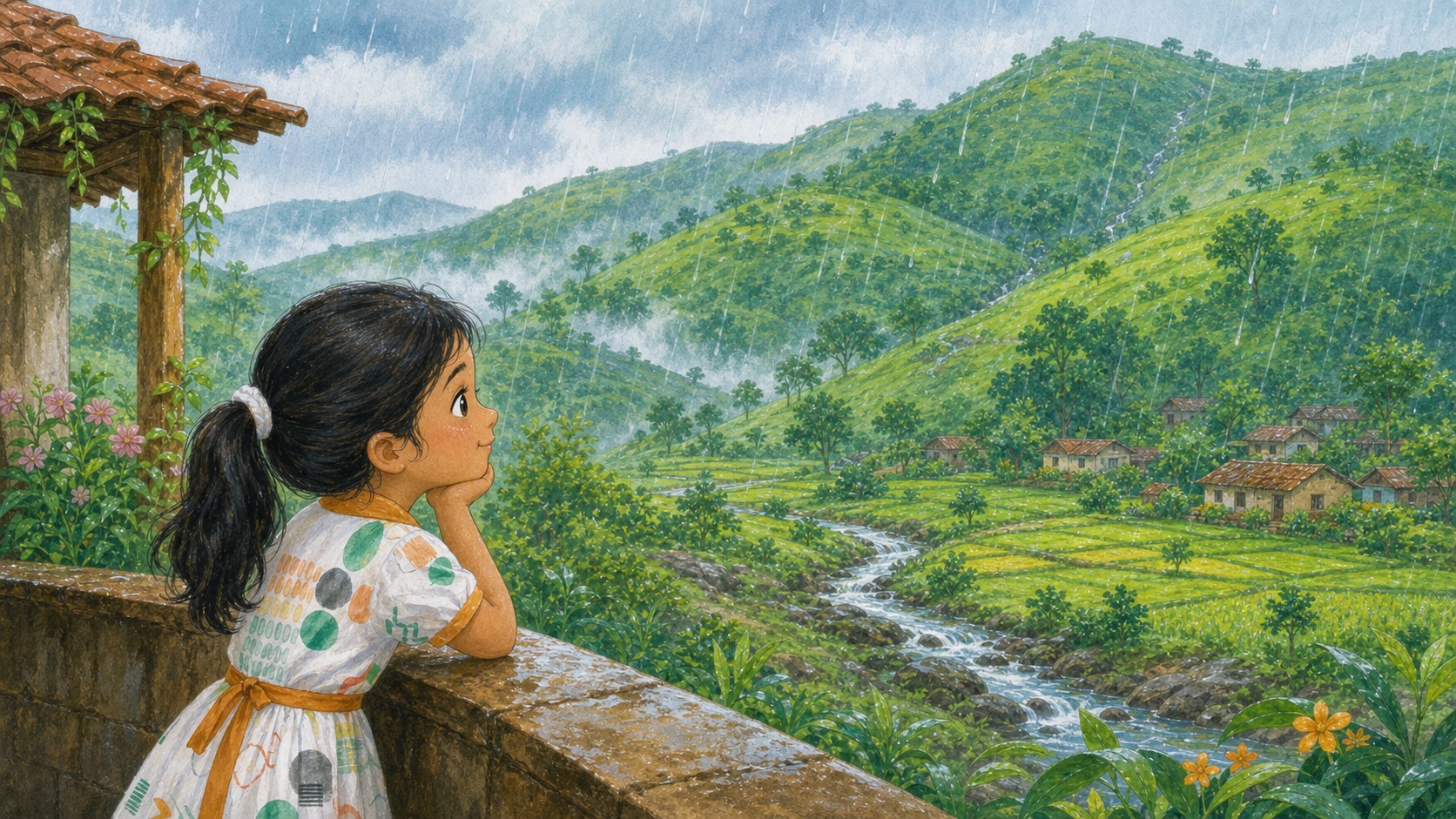
Tara watches monsoon rain flow from green Satara hills into a stream.
Look closely: rainwater is beginning a journey.

Page 1

In Satara, Tara watched rain slide down the hills and run into a silver stream.

Ask: Where does rainwater go after it leaves our street, farm, or hill?

Child-led bridge: begin from water children may know, not from the sea.
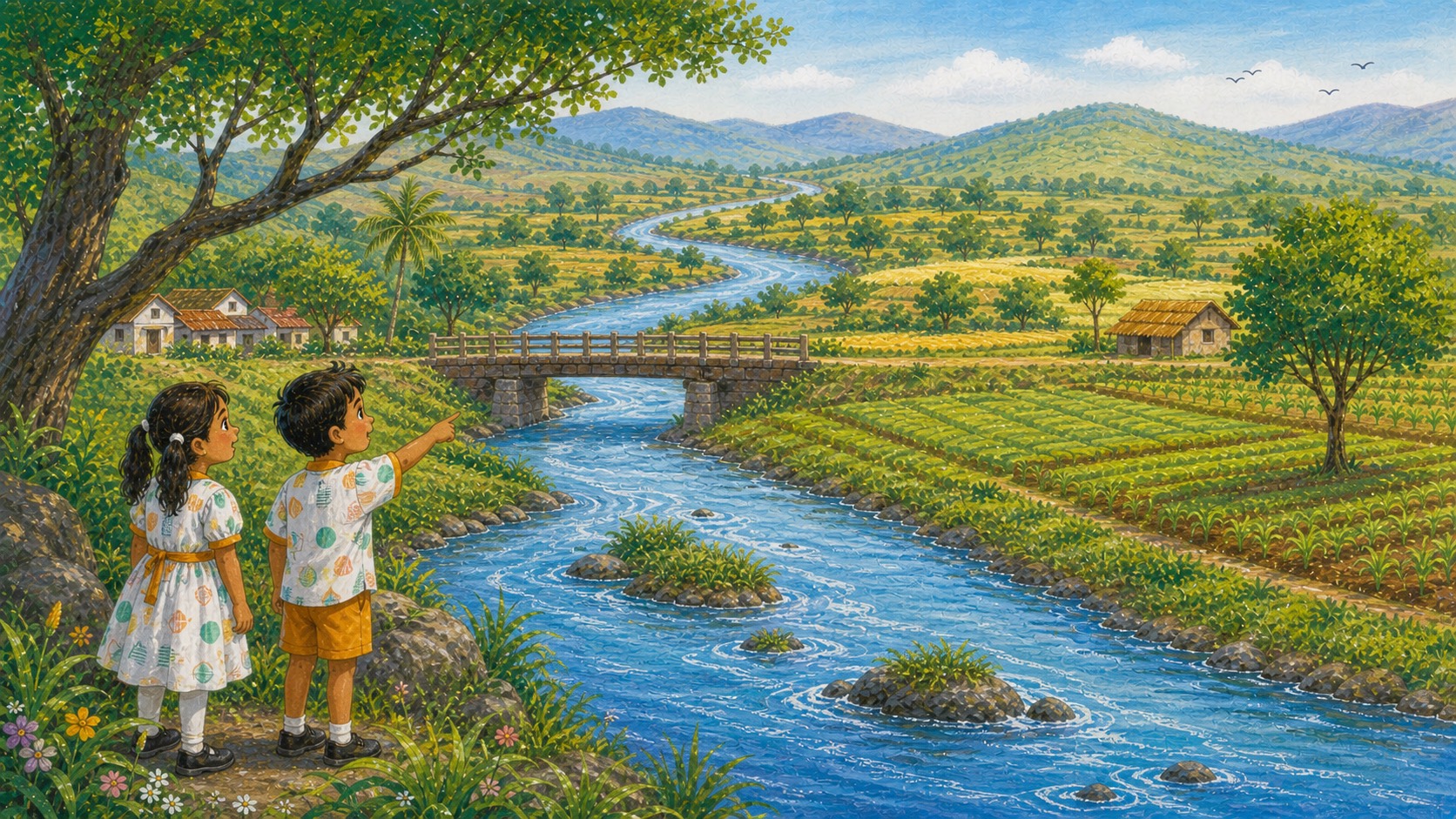
A river travels through farms, bridges, and a train route away from Satara.
The stream joins a river and keeps moving.

Page 2

The stream whispered, β€œI join a river. The river keeps travelling. One day, I meet the great salty sea.”

Ask: If water could travel, what might it see on the way?

Key idea: rivers and rain connect inland places to the ocean.

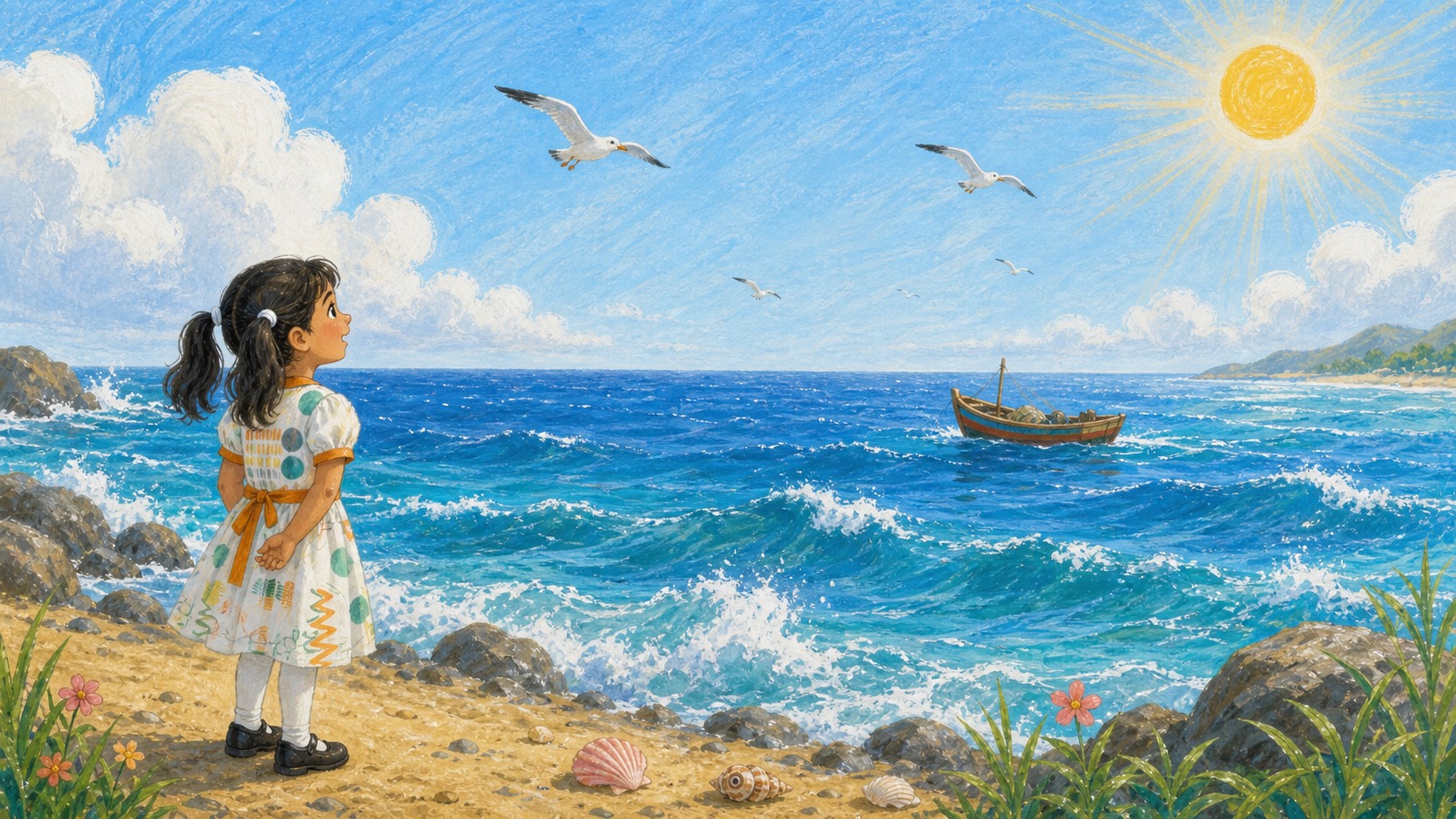
Tara sees the wide blue sea with rolling waves, seabirds, and a small boat.
The water rolls, splashes, and sings.

Page 3

At the sea, the water did not sit quietly. It rolled, splashed, sang, and tasted salty.

Ask: What sounds and movements do you imagine at the ocean?

Build sensory context before naming ocean creatures.

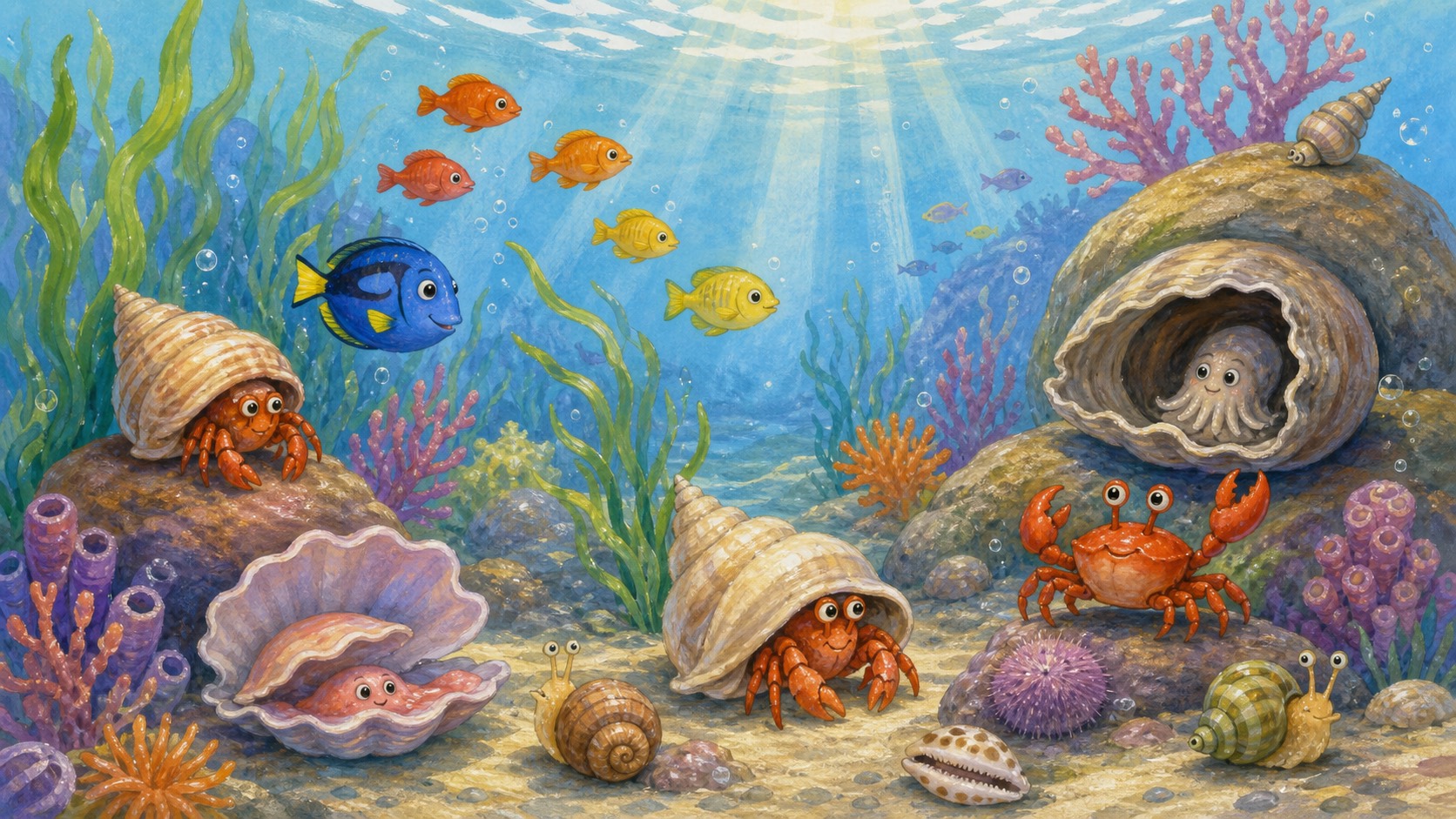
Friendly fish, crabs, sea plants, shells, and soft ocean animals underwater.
Some ocean friends need strong coverings.

Page 4

Under the waves lived fish, crabs, plants, and many soft little animals who needed strong homes.

Ask: Which animals have hard coverings? How might that help them?

Guide children toward protection, homes, and hard outer coverings.

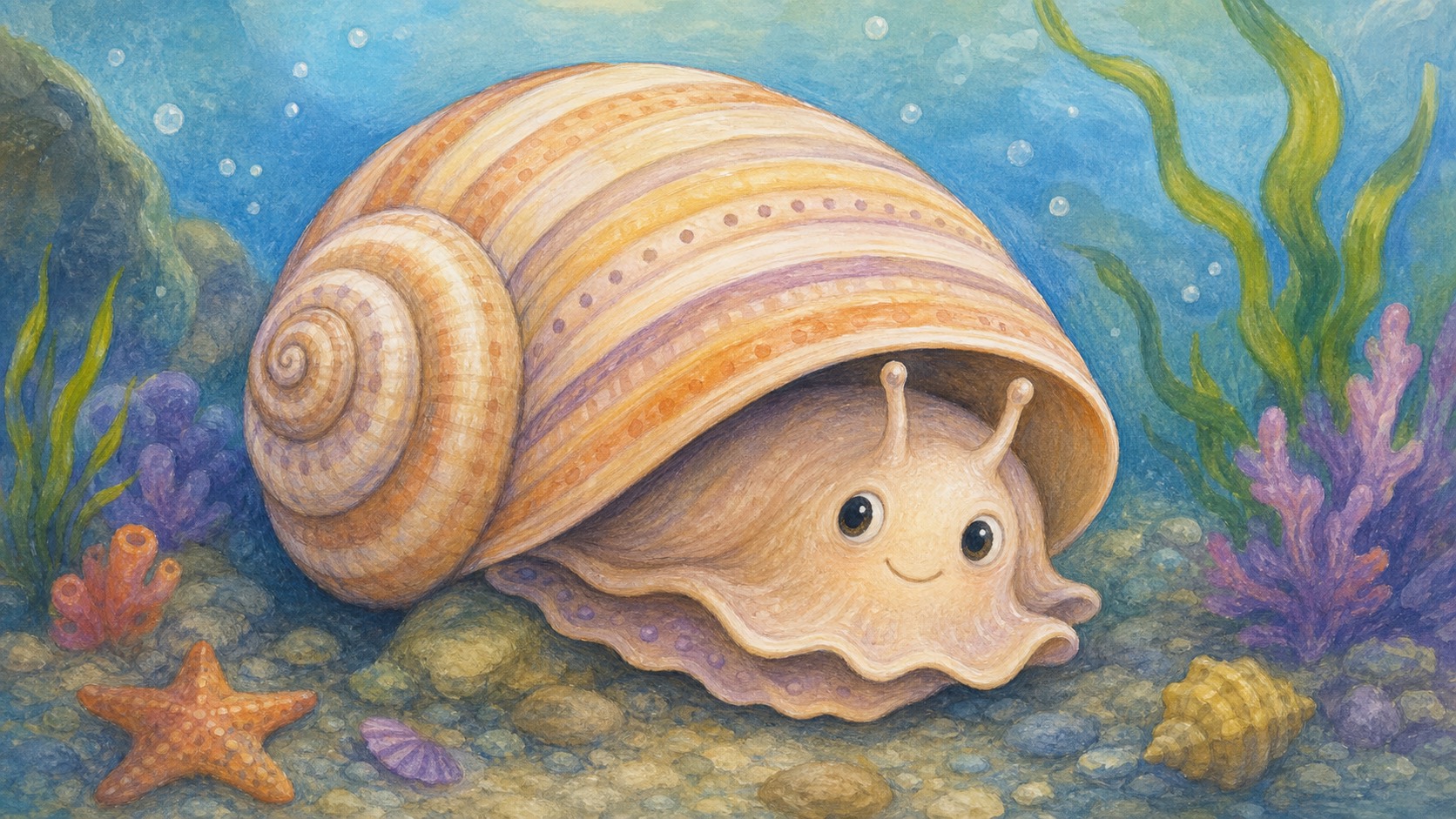
Moti the soft mollusk peeks from a patterned shell underwater.
A shell can be a tiny home.

Page 5

One soft ocean friend was Moti the mollusk. Moti made a hard shell, layer by layer, like building a tiny house.

Ask: What shape, colour, or pattern would your shell-house have?

Scientific anchor: many seashells are made by mollusks and protect soft bodies.

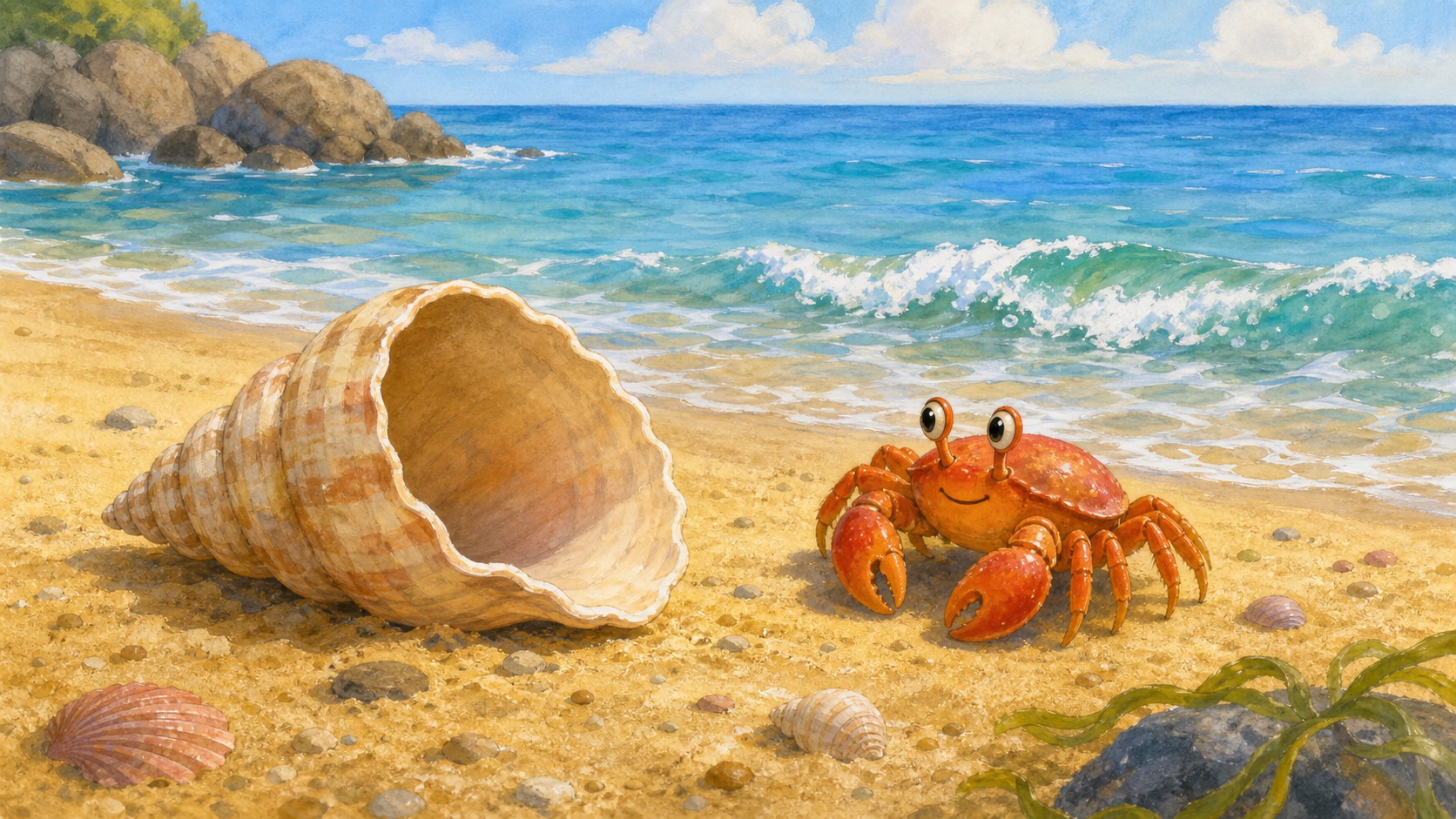
An empty seashell rests on warm sand near gentle waves and a friendly crab.
Only empty shells are used for art.

Page 6

When an ocean animal no longer needed its shell, the empty shell rolled with the waves and rested on the sand.

Ask: How can we know a shell is empty? Why should living animals stay in their homes?

Ethic: collect or use only empty shells.

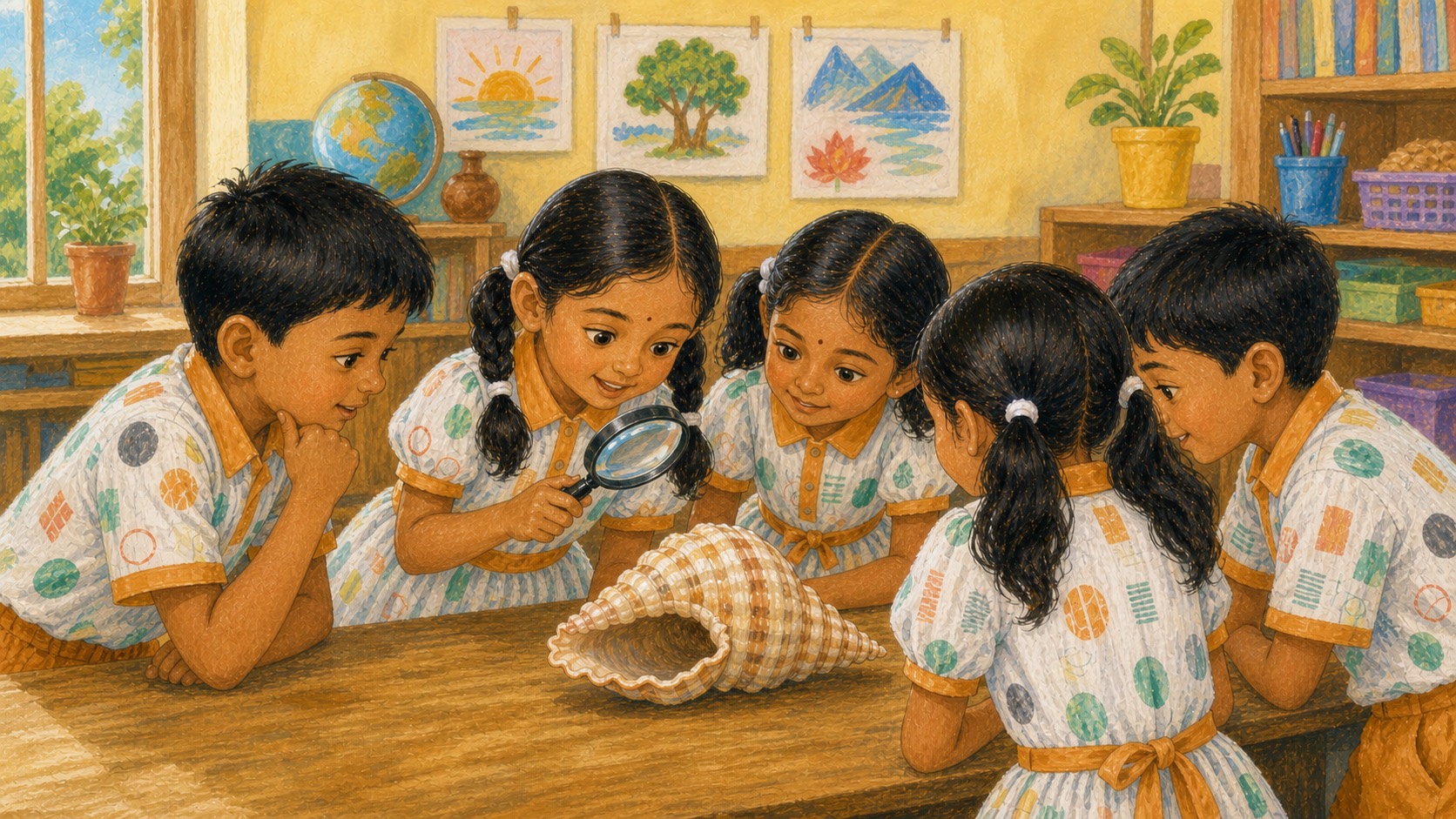
Grade 1 children observe an empty seashell on a classroom table with curiosity.
Notice: bumpy, cool, curved, striped, smooth, rough.

Page 7

Back in class, Tara held an empty shell. It felt bumpy, cool, and strong. β€œIt has travelled farther than me,” she smiled.

Ask: What do you notice when you touch or look closely at a shell?

Observation words: smooth, rough, spiral, striped, curved, tiny, heavy, light.

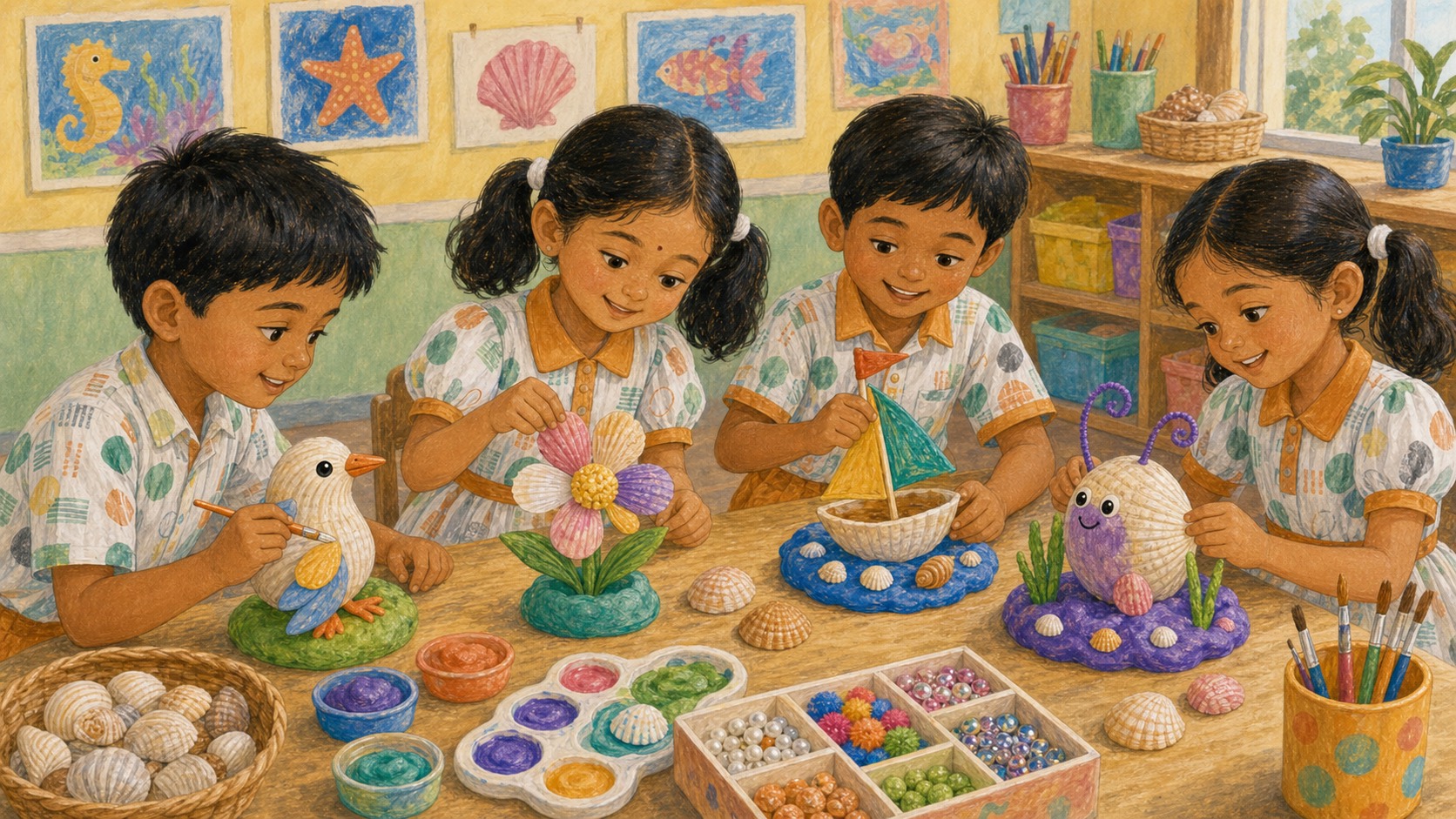
Children make open-ended art using empty shells, clay, colours, and decorative material.
What is your shell asking to become?

Page 8

Tara did not copy the sea. She listened to the shell and made her own idea: a bird, a flower, a boat, or a secret ocean friend.

Ask: What is your shell asking to become?

Move to art-making: children choose from shape, texture, memory, or imagination.